
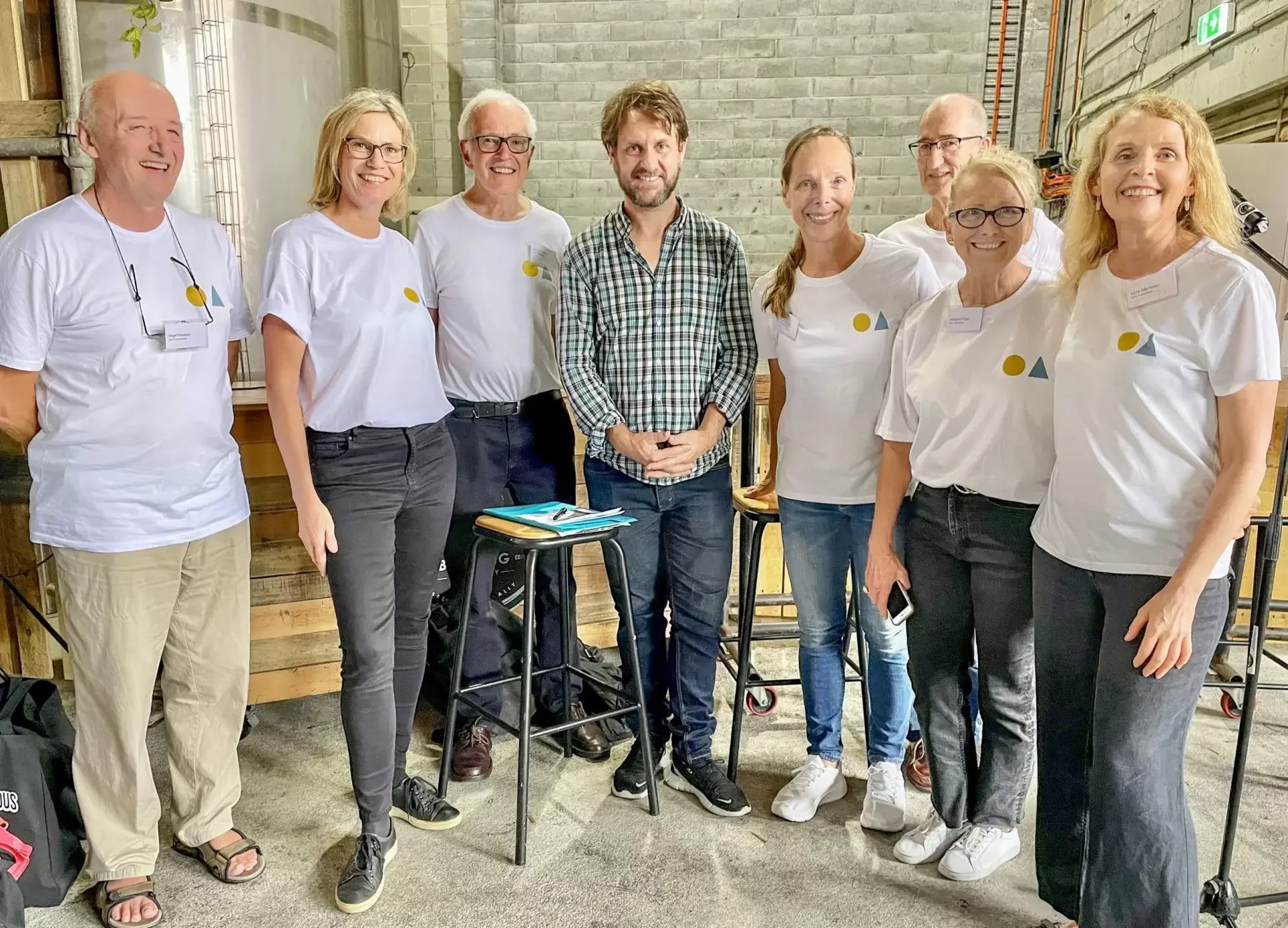
Local champions
Solar Alliance are just one of many groups who are a not-for-profit championing the health and economic benefits of energy efficient buildings.
This is your once-in-a-generation opportunity to shape how new homes and buildings are designed across the Northern Beaches for decades to come. Strong all-electric and energy-efficiency standards will create healthier homes with better indoor air quality, reduce emissions, and lower power bills for homeowners and renters. When these features are included at the design stage, the additional cost can be as little as $1,000 per dwelling—far less than the cost of retrofitting inefficient buildings later.
We want residents to make a submission to Council so decision-makers clearly hear that the community supports these provisions.
Please urge Council to retain, strengthen and properly implement the all-electric requirements in the new LEP and DCP, and not allow them to be weakened through pressure from developers seeking short-term savings.
The buildings approved today will affect our health, household costs and environment for generations, so we need to set the highest practical standard now.
Council is updating the planning laws
Why?
To improve indoor air quality and health, increase resilience and reduce the ongoing cost of running a home.
Lower bills every year
City of Sydney modelling estimates that households in new all-electric developments could save approximately $626 a year compared with gas-connected homes.
Lower bills every year
The NSW Government estimates that a heat-pump water heater can save households between $200 and $800 a year compared with a traditional system. Heat pumps can also be programmed to use daytime rooftop solar, reducing costs even further.
Avoid paying for two energy systems
An all-electric home needs one energy connection—not separate electricity and gas infrastructure, meters and ongoing charges. The NSW Government estimates that households switching their final gas appliance to electric cooking and disconnecting gas can avoid around $400 a year in gas costs, and the AEMC estimates that the price to access gas will continue to rise over the next decade as people exit the system for cheaper and healthier alternatives.
Healthier Air Inside Your Home
An Australian study published in the Medical Journal of Australia estimated that exposure to gas stoves was associated with 12.3% of the national childhood asthma burden.
Induction cooking is also faster, keeps kitchens cooler, avoids open flames and can use up to 30% less energy than gas or traditional electric cooking.
Why this matters particularly for renters
A homeowner may eventually be able to replace inefficient appliances. A renter generally cannot redesign the building, remove its gas connection, install solar or replace the landlord’s hot-water system.
Planning rules are therefore one of the few ways to ensure renters receive the same access to lower bills, efficient appliances, cleaner indoor air and comfortable homes as property owners. If these features are omitted when a building is designed, renters may be left paying the higher operating costs for decades.
Dear Mayor, Councillors and Strategic Planning Team,
I strongly support the intent of the proposed Northern Beaches Local Environmental Plan and Development Control Plan to establish a consistent, high-quality planning framework across our local government area.
In particular, I ask Council to retain and strengthen the proposed all-electric, renewable-ready and resilient building provisions in section 4E.2 of the draft DCP.
The draft currently requires new residential development, excluding alterations and additions, to operate exclusively on electricity for standard building services. It excludes gas cooktops, gas ovens and gas space heaters, requires solar photovoltaic systems where adequate sunlight is available, and requires plans to identify future battery-storage locations. Its stated objectives include improving health by reducing exposure to combustion pollutants, maximising renewable energy and lowering operational costs. These are sensible, practical and future-focused requirements.
Building for the next century
Buildings approved under this planning framework will remain with our community for many decades. Council’s Protect. Create. Live strategy recognises that homes and other buildings may last for 50 to 100 years, and that decisions made now will shape energy consumption, resilience, pollution and liveability for generations.
Weakening the all-electric provisions would be inconsistent with the very strategy that the new planning framework is intended to implement.
The strategy also reflects the Community Strategic Plan’s aspiration to protect the natural and built environment from global and local pressures, and to lead in managing resources sustainably while balancing development with our lifestyle and environment.
The draft DCP itself identifies the direct alignment between section 4E.2 and Council’s goals for net-zero new buildings, solar uptake and reduced community emissions. It also identifies improved health, long-term affordability and resilience as intended outcomes.
Healthier homes
Gas is not simply another interchangeable household energy source. Burning gas inside homes produces combustion pollutants. Removing indoor combustion improves air quality and particularly benefits children, older people and people with respiratory vulnerabilities.
An Australian peer-reviewed modelling study published in the Medical Journal of Australia estimated that exposure to gas stoves was associated with 12.3 per cent of the national childhood asthma burden. The researchers recommended reducing children’s exposure to gas-combustion products. This does not mean every individual asthma case is caused by a stove, but it is a significant population-health concern that planning policy should not ignore.
All-electric homes also avoid open indoor flames and unwanted combustion heat. Induction cooking, heat-pump hot water and efficient reverse-cycle systems allow residents to cook, heat and cool their homes without producing combustion pollution inside the building.
Housing quality is a health issue. Council should not knowingly approve a new generation of buildings that will require residents to pay later to remove infrastructure we already know is unnecessary and undesirable.
Environmental responsibility
Electric buildings can be powered by rooftop solar, batteries and an increasingly renewable electricity network. Their emissions can therefore continue to fall over the life of the building. Installing gas now creates a future retrofit problem.
The Protect. Create. Live strategy states that electricity and transport together account for 85 per cent of Northern Beaches community emissions and identifies renewable energy and more efficient homes and workplaces as central responses. Its definition of community emissions expressly includes both electricity and gas use, while its planning framework identifies the LEP and DCP as tools for delivering strategic environmental outcomes.
A single energy system can also benefit developers
All-electric design should not be presented as an uncompensated burden on development.
Using one energy system can avoid the need for:
a fossil-gas connection and associated network works
internal gas pipework, risers, regulators and meters
duplicated electrical and gas service design
combustion ventilation and flue coordination
additional service penetrations and plant arrangements
future removal of redundant gas infrastructure.
The exact saving will vary by site, and some developments may require careful electrical-load management or network augmentation. However, City of Sydney’s assessment found that avoiding gas infrastructure can reduce upfront costs and prevent expensive future retrofits. Ausgrid described electrification as a cost-effective alternative to later conversion and advised that much of the additional demand could be accommodated within the existing network, with good load management helping to limit infrastructure requirements.
It also protects purchasers and tenants from paying two sets of connection and supply charges and from having to replace gas appliances and infrastructure later.
The Green Building Council of Australia (GBCA) supports the transition away from gas. In a GBCA case study, Frasers Property described the commercial logic very simply:
“By going all electric from the outset, we don’t need to spend any money stripping out gas down the track.”
The developer’s conclusion was: they simply did not install it in the first place. GBCA has also highlighted potential savings from avoiding gas reticulation in new developments and the health and climate benefits of electric cooking.
Northern Beaches would not be acting alone
Other NSW councils have already demonstrated leadership:
Waverley Council prohibits gas cooktops, gas ovens and internal gas space heating in residential development, with electric systems required instead.
North Sydney Council’s amendment providing for electrification of all new residential development came into force on 1 July 2026, following consideration of environmental, health and economic reasons.
City of Sydney unanimously adopted broader all-electric controls in October 2025. They will apply to new residential accommodation and specified larger offices, hotels and serviced-apartment developments after 31 December 2026.
City of Parramatta already applies all-electric requirements to new buildings in the Parramatta City Centre, although Council deferred extending them outside the centre while awaiting the NSW Gas Decarbonisation Roadmap.
Northern Beaches Council would therefore be adopting an increasingly established planning approach, not conducting an isolated experiment.
Protect the provisions from dilution
I ask Council to ensure that the final planning framework:
Retains the requirement that new residential buildings operate exclusively on electricity for ordinary building services.
Explicitly prohibits new fixed fossil-gas connections for those developments, rather than only listing individual prohibited appliances.
Expressly includes cooking, space heating, water heating and pool heating within the all-electric requirement.
Retains the solar-PV and future battery-storage provisions.
Avoids weakening phrases such as “where practicable” or broad commercial-feasibility exemptions that would make compliance optional.
Provides only narrow, evidence-based exceptions for genuinely specialised processes that cannot reasonably be electrified—not ordinary residential uses.
Requires energy systems and appliances to be clearly identified in DA and construction documentation.
Develops standard consent conditions and verification processes so approved all-electric designs are carried through to construction and occupation.
Requires written, publicly available reasons for any approved variation from the control and reports regularly on the number and nature of those variations.
Investigates complementary LEP provisions where legally available, recognising that an LEP carries greater statutory weight while a DCP provides detailed guidance. Council’s own exhibition material explains this difference, making clear drafting and consistent implementation especially important.
Any concessions to electrification determine whether our future buildings are healthy, efficient, resilient and worthy of the Northern Beaches.
Development must remain financially feasible, but short-term project margins should not override the long-term costs imposed on residents and the community. The purpose of planning controls is to establish the minimum standard the public can expect, including when that standard is less profitable than the weakest possible alternative.
Please strengthen the all-electric building provisions and the broader environmental and design-quality controls in the draft LEP and DCP. They are consistent with the community’s adopted vision, Council’s environmental strategy, responsible public-health policy and the direction already being taken by leading councils and property organisations.
The Northern Beaches should not be building yesterday’s homes for tomorrow’s families.
Yours sincerely,
Draft Letter for you to send


There are many different aspects to the proposed DCP and LEP changes. You may wish to explore other components and provide feedback.
Don’t forget to ask them to strengthen their all-electric rules at implementation so we can lock in efficient rules